
POD Information

Harbour Landing Emergency Plan
Neighbourhood Pods

• As part of our emergency plan, Harbour Landing has been divided into six “pods” (see map below).

• Pod Team: Each pod has a Pod Team consisting of a Leader and an Alternate. Should the Pod Leader be away during an emergency, the Alternate will take over. Some pods might have more than one Alternate. The names and contact information of people on your team are on
the front cover of your personalized package which was delivered to you.

• Household Information Sheet: A loose sheet is enclosed for you to fill out with important contact and household information for the Pod Leader to use in an emergency. You can include as much or as little information as you like, but obviously sharing information about your circumstances and needs will help the Team offer the best support in an emergency.

• Your Leader has collected the sheets and will share contact information with other members in your pod ONLY if you gave permission. Only your Pod Team and the Harbour Landing Committee will have access to your household information.

What Happens in an Emergency?

• How will you know if there’s an emergency? Most emergencies will be obvious to all residents like an earthquake, severe storm, or a long-term power outage. If you have signed up for the Saanich Peninsula Alert system, you could get an alarm on your cell phone. Pod Leaders might be informed with a walkie talkie emergency signal from the Captain and then communicate it to members of their pod. Pod Leaders will activate air horns if there are local emergencies affecting Harbour Landing such as a fire or gas leak. If the air horn is activated, Pod Leaders will contact and direct residents.

• In an emergency, households will follow the steps outlined on the laminated sheet in your information package: Steps to Follow in an Emergency.

 • The Pod Leader will coordinate communications and assistance within your pod. You can contact the Leader or Alternate if you have questions or require help.

Getting to Know Your Pod

• We are hoping that these pods will also help to foster neighbourliness in our community. You might already know your nearby neighbours, but if not, this is an opportunity to get to know them. Neighbours within pods can help each other out, offer increased security by keeping an eye on each other’s property, check your home when you are away, etc.
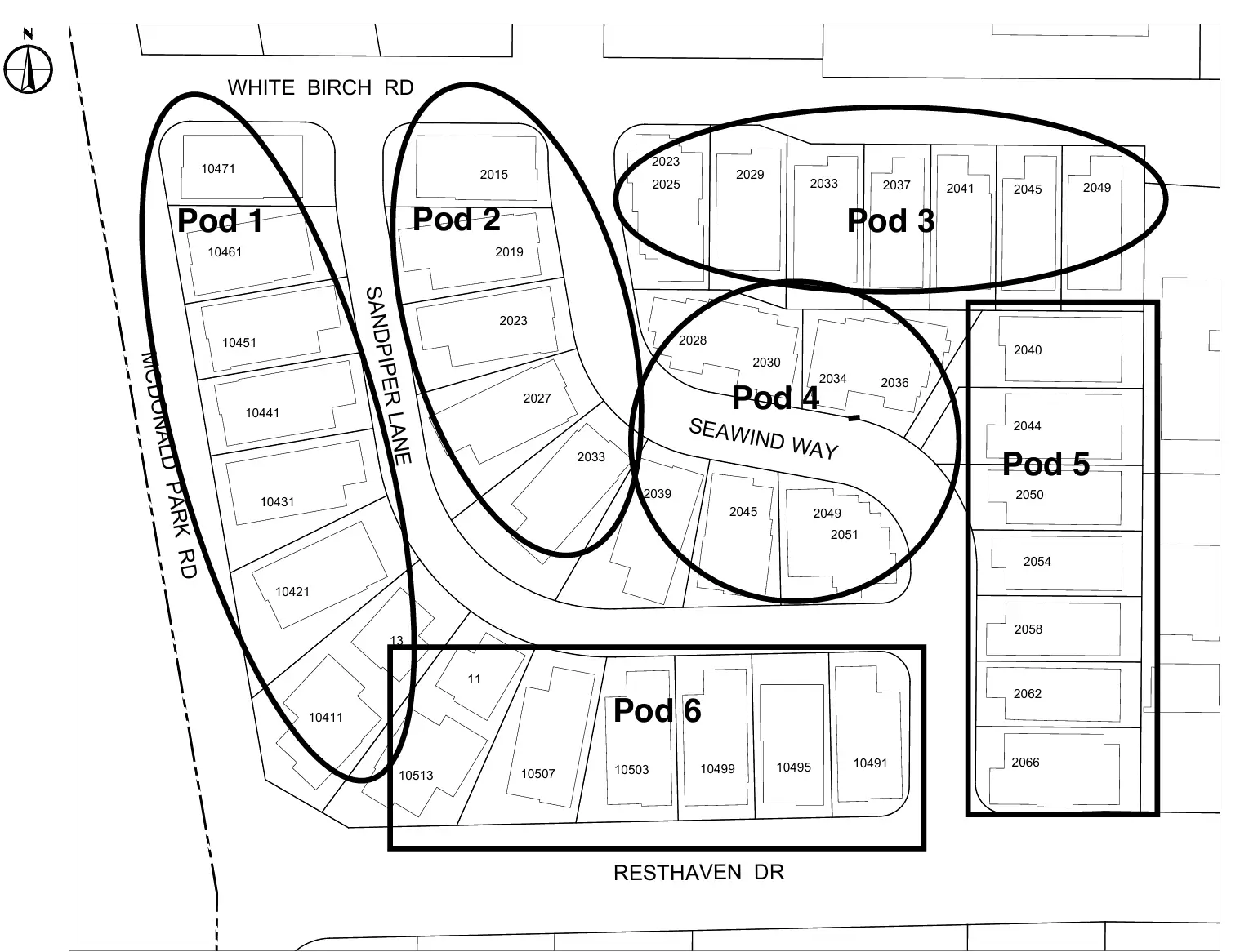
Harbour Landing PODs

Role of the POD Leader


BEFORE AN EMERGENCY OCCURS

Contact and Skills/Resources Information

  • Ensure you keep the contact information for your Pod up to date. Be sure that each Pod household has contact information of other pod members. Ensure that you get permission to share contact information in this way.
  • Here’s what’s included in the emergency preparedness materials that each household should have:
    • Prepare Yourself Guide from the CRD (2024)
    • Information Package booklet
    • Steps to Follow in a Major Emergency laminated sheet
    • HELP/OK Sign for window
    • Pet Emergency Sticker if pets are in household
  • If a new owner doesn’t have a full package, contact any member of the Harbour Landing (HL) Committee to get new materials. Contact information is on the cover page of this package.

Walkie Talkie

  • Keep your walkie talkie in an accessible place.
  • Ensure it is charged and that a charged backup battery pack is available.
  • If you go out of town, leave your walkie talkie with your entire kit with the Alternate.

Gas Meters/Outlets

  • Know where the gas meters/outlets are for each residence in your pod and how to turn the gas off.


WHEN AN EMERGENCY OCCURS

How will Harbour Landing know there’s an emergency

  • Obvious (e.g. earthquake, storms, long-term power outage, gas leak)
  • Saanich Peninsula Alert
  • Walkie talkie emergency signal to Pod Leaders from Captain
  • Residents notify Pod Leader
  • Airhorns (e.g. fire/gas leak)


Initial Actions

  • Secure your own household.
  • Use your pod checklist and contact with each household member in your pod by phone.
  • If landline and cell service is down, or you can’t reach a household by phone, and if it’s safe to do so, physically check each home in your pod for the OK or HELP signs. Your Alternate may accompany you.
  • If there’s a HELP sign or no sign, knock on the door to determine what the individuals in the household require (see below).
  • Do not enter residences that could be unsafe.
  • Beware of electrical wires and outlets under water, as well as façades and insecure items that could give way, particularly in an aftershock.


First Aid

  • From phone calls or home checks, assess if anyone needs first aid assistance.
  • If anyone is seriously injured, immediately inform the Captain to call 911 to ensure ambulance services are informed even if they might not be able to arrive quickly.
  • If they are mobile and if it’s safe to do so, have someone take them to the First Aid Station at 2019 Seawind; enter from the garage on Sandpiper.
  • If they are not mobile, report their condition to a Captain to send a medical volunteer to their home to help.


Gas Leaks

  • Confirm that there isn’t a gas leak in your pod (residents in your pod should have already checked their gas meter to determine if there’s a leak).
  • If there is a leak (rotten egg smell or sound of gas hissing), tell owner to evacuate.
  • Pod Leader will inform a Captain of the leak. Captain will call FortisBC Emergency Number: 1-800-663-9911 or 911. If Fortis can’t be contacted, the Pod Leader or a Captain may elect to turn off the gas. See directions in this Info Package. Use the wrench in your emergency bag.
  • FortisBC also may remotely turn off natural gas service in the affected area. Owners should NOT attempt to turn the gas off or on.
  • Pod Leaders should note any action on checklist.


Damage in Your Pod

  • Quickly assess any damage to the homes in your pod and note on emergency checklist.


Communication & Muster Station

  • Report on the condition of your Pod to a Captain by phone or walkie talkie.
  • In some emergencies, a muster station may be set up at 10451 McDonald Park Road with entry from Sandpiper. The Captains will determine if Pod Leaders need to congregate there.
  • Communicate regularly with a Captain as directed and share updates with neighbours in your pod.


WELCOMING NEW OWNERS 

IMPORTANT: If a home is sold in your Pod, arrange to meet the new owners to welcome them to Harbour Landing and to ensure that they have a complete Emergency Preparedness Package that the previous owners left behind.

You can give them a copy of the Welcome Letter for New Residents which is available from anyone on the committee. Also please take time to orient the new owners to how the program works. Encourage them to assemble a Shelter-In-Place Kit and Grab-and-Go Bag using the Prepare Yourself Guide.

Also ask any new owners to complete a Household Information questionnaire. A blank copy is included at the back of the Information Package, but If you need additional blank copies, contact anyone on the HL Committee. Share any new information with the HL Committee. 


SUPPLIES 

Emergency Checklist 

  • Names/contact information for each household in pod
  • Gas leaks
  • Injuries
  • Residential damage
  • Supplies/resources required by each household in your pod


Kit for Pod Leader/Alternate 

  • Emergency checklist
  • Clipboard and pens
  • Neon safety vest
  • Walkie talkie with power pack (all charged)
  • Air Horn
  • Wrench to turn off gas
  • Flashlight
  • IMPORTANT: Give your kit to your Alternate if you go out of town.


                                  THANK YOU FOR PARTICIPATING IN THIS PROGRAM AND FOR HELPING YOUR HARBOUR LANDING NEIGHBOURS!

FULL PRINTABLE VERSION

Update; September 2026

Role of the Captains

                                BEFORE A DISASTER/EMERGENCY OCCURS

Contact and Skills/Resources Information

  • Assist with the collection of residents contact and skills/resources information by the pod leaders and alternates.
  • Record the contact and skill resources information in the Committee pages of the website.
  • Make a complete resident checklist of residents by pod.
  • Ensure that the pod leader and alternates know you, you have their contact information and you have them in a text and email distribution list.
  • Whenever possible, know when your pod leaders are out of town.
  • Make a complete list of emergency agencies and their contact information.
 

Walkie Talkies

  • Keep your walkie talkie in an accessible place.
  • Tune the Walkie Talkie to Channel 13
  • Ensure it has charged batteries.
  • Have spare batteries available.
  • If you go out of town, leave your walkie talkie with the alternate captain.


                            WHEN A DISASTER/EMERGENCY OCCURS

Initial Actions

  • Secure your own household.
  • Beware of electrical wires and outlets under water, as well as façades and insecure items that could give way, particularly in an aftershock.
 

Muster Station

  • Go the Muster Station at 10451 McDonald Park Road; enter from the garage on Sandpiper.
  • Communicate with each of the pod leaders regarding the condition of the pods and any injuries. Record the status.
 

First Aid

  • Assess anyone taken to the First Aid Station and call emergency services, if required.
 

Gas Leaks

  • Confirm that there are no gas leaks in each pod.
  • If there is a leak, record the action taken by the homeowner.
  • Contact Fortis, if required.
 

Damage in Pods

  • Record any reported damage to the residences in the Pods.
  • Contact emergency services or the appropriate utility regarding damage, if required.
 

Communication

  • Remain in close contact with the pod leaders for any updates or change in status.
  • Monitor local AM/FM radio stations or internet feeds for updates and relay any relevant information to the pod leaders.
  • Contact any relevant emergency agencies for updates.

Other Information